

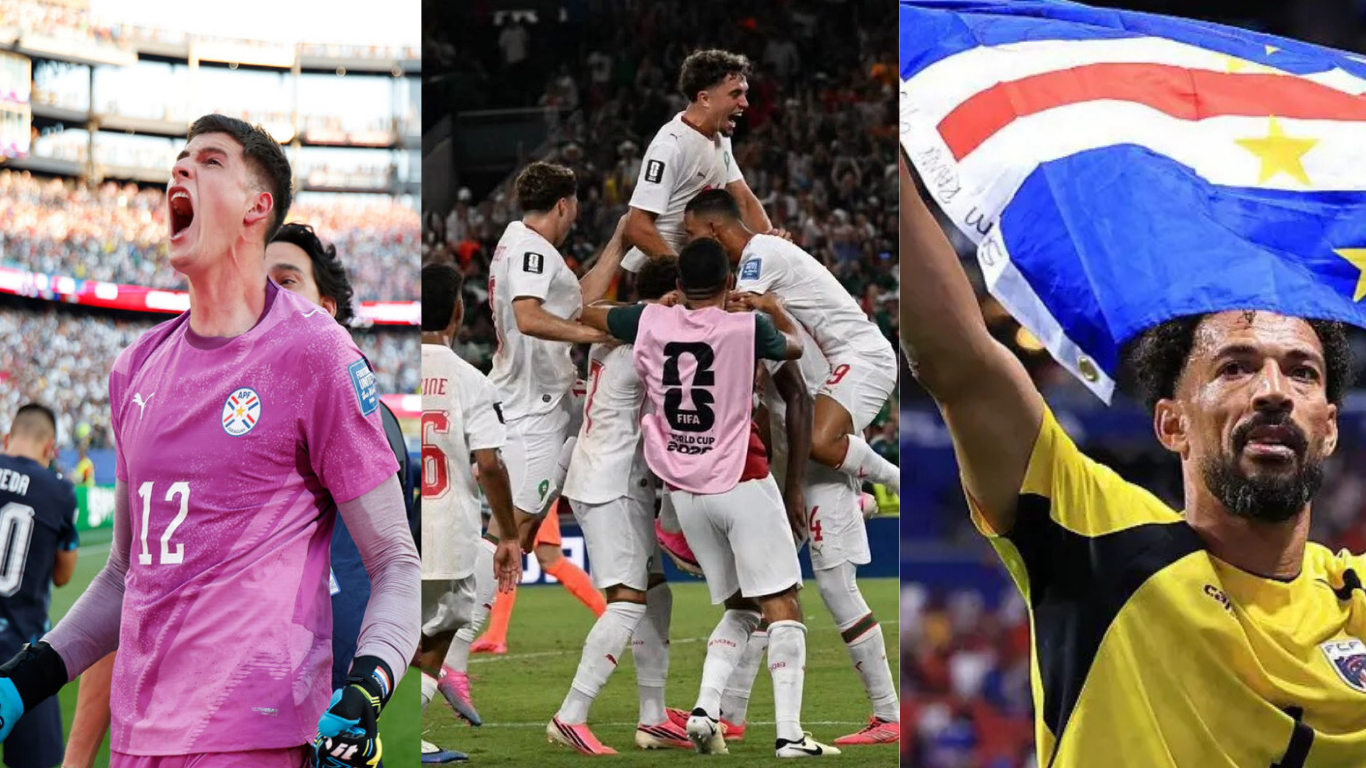
For decades, international football followed the same script. The traditional giants were expected to beat the so-called “smaller nations” comfortably. An upset was considered a surprise rather than a real possibility.
Today, that script no longer fits modern football.
The 2022 World Cup was the biggest wake-up call. Morocco’s historic run to the semi-finals wasn’t just a fairytale ; it was proof that the gap between football’s traditional powers and emerging nations is getting smaller. After beating Belgium in the group stage before eliminating Spain and Portugal in the knockout rounds, Morocco showed the world that they belonged among football’s elite.
And yet… many people still didn’t learn the lesson.
Before the Netherlands faced Morocco in the knockout stage of the 2026 World Cup, the discussion wasn’t about how dangerous Morocco had become. Instead, it was about why the Dutch shouldn’t be worried.
Former Dutch international Rafael van der Vaart even repeated the controversial opinion he had previously expressed on Dutch television:
“Not to be rude, but every Moroccan that’s not good enough to play for the Netherlands is now playing for Morocco. We have players from Liverpool, Barcelona, etc. So let’s not worry about Morocco, really.”
On paper, the Netherlands had the bigger names.
On the pitch, none of that mattered.
Morocco knocked the Dutch out of the tournament in another memorable World Cup performance. It wasn’t luck. It wasn’t a miracle. It was another reminder that reputation doesn’t win football matches.
The same story repeated itself elsewhere.

Before Germany’s knockout clash with Paraguay, several football commentators confidently predicted an easy German victory. Some even described Paraguay as little more than a “third-grade” team, suggesting the match would feel like a routine domestic cup tie.
Football had other plans.
Paraguay matched Germany physically, tactically, and mentally before eliminating them on penalties.
After the defeat, Joshua Kimmich admitted:
“It feels terrible… We struggled badly in all three matches against lower-level teams. We didn’t play at our best against any opponent.”
That quote says a lot.
Germany still viewed Paraguay, Ecuador and Côte d’Ivoire as “lower-level teams.” The problem is that modern football no longer agrees.
Belgium offered another example.
After surviving a difficult match against Senegal thanks to a late and controversial penalty, head coach Rudi Garcia suggested that these kinds of teams usually lose their tactical discipline towards the end of matches.
Maybe that was once true.
But today’s African, Asian and South American emerging nations are no longer relying only on passion or physicality. Their players compete every week for Europe’s biggest clubs. Their coaches are tactically prepared. Their organisations are improving every year. Many of these teams now arrive at World Cups believing they can beat anyone not simply hoping to compete.
That confidence changes everything.
This is exactly why football giants keep getting caught by surprise.
They still prepare for these matches believing they’re facing the underdogs of ten or twenty years ago, while in reality they’re facing experienced internationals playing in the Premier League, La Liga, Serie A, the Bundesliga and Ligue 1.
The names on the shirt may be different.
The quality isn’t.
Will football’s traditional giants continue to win most major tournaments? Probably.
But the days of expecting easy victories are disappearing.
The gap isn’t closed yet.
It’s simply becoming much smaller than many people are willing to admit.
And perhaps that’s the biggest mistake football’s biggest nations continue to make not underestimating talent, but underestimating how much the game itself has changed.
