

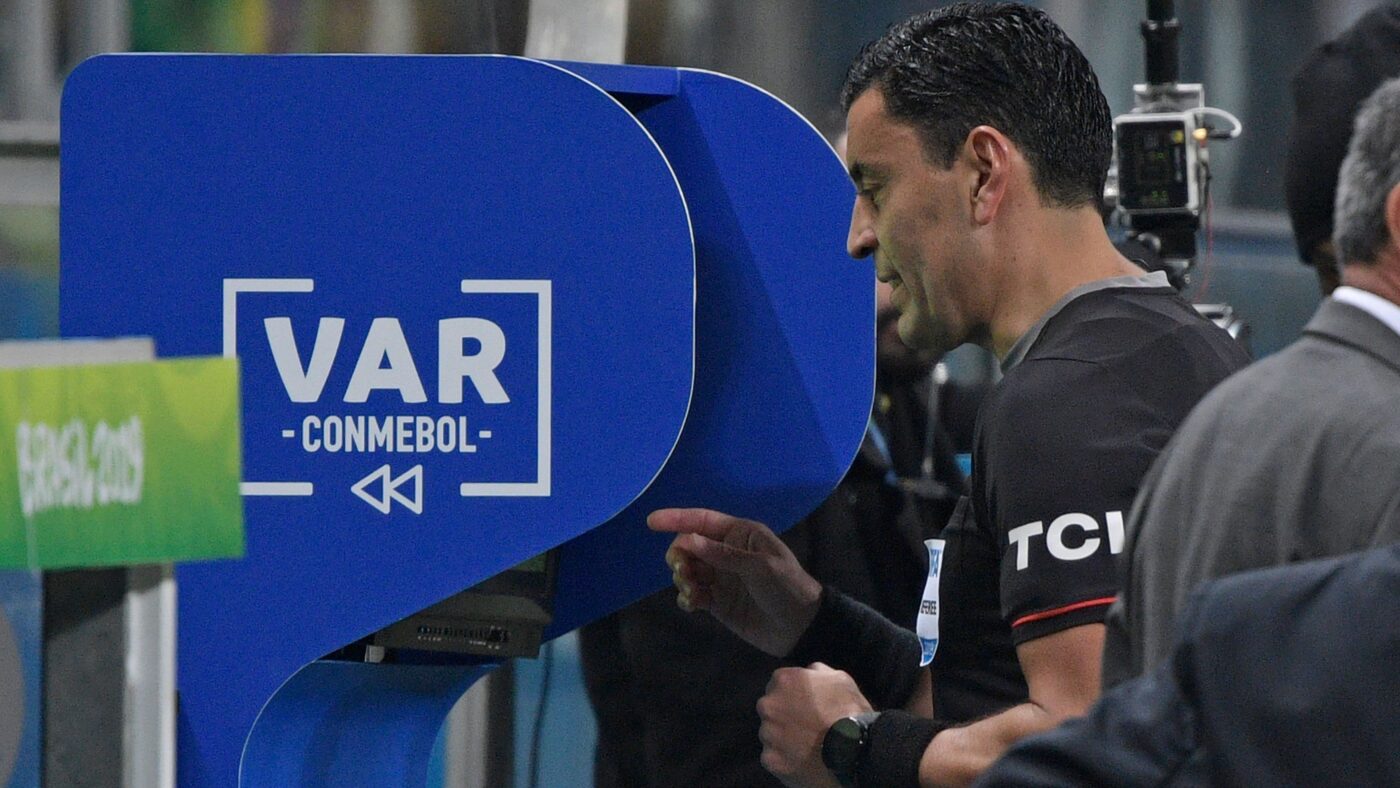
Just a few days ago, many football fans were asking whether the Video Assistant Referee (VAR) system was being applied consistently at the World Cup.
Since the beginning of the tournament, supporters have questioned not only VAR interventions but, more importantly, its lack of intervention in several controversial moments. From Ghana’s penalty appeal against England, to Brazil’s disallowed goal against Scotland, Germany’s early goal against Ecuador, Japan’s opening goal against Tunisia, and Lionel Messi’s red card against Algeria, it has often been difficult to understand why VAR chose to intervene in some situations while remaining silent in others.
As the tournament has progressed, it has become increasingly clear how difficult it is to maintain a consistent standard for VAR decisions. This inconsistency has made it harder for players, coaches, and fans to fully trust the system.
FIFA’s Head of Refereeing, Pierluigi Collina, has repeatedly stated that football is a physical sport and that not every contact should be considered a foul. He has also emphasized his desire for free-flowing games played at a high tempo during this World Cup.
However, allowing more physical challenges also raises the threshold for VAR intervention. Determining what qualifies as a “clear and obvious error” becomes far more difficult.
In other competitions, such as the UEFA Champions League, the threshold for VAR intervention appears lower, with video officials becoming involved more frequently. This creates a greater sense of consistency because players and fans expect reviews, even if that differs from VAR’s original philosophy of correcting only clear mistakes.
Following Ghana’s goalless draw against England, coach Carlo Queiroz said that “VAR went for a coffee” after his side were denied what many believed was a penalty following Ezri Konsa’s challenge on Prince Kwabena Adu. It was a clumsy challenge, and many were surprised that the incident was not reviewed.
The following day, Brazil had a goal ruled out against Scotland after Vinícius Júnior was judged to have fouled Jack Hendry in the build-up. Many observers believed Hendry had actually initiated the contact, raising fresh questions about the consistency of VAR decisions.
Former World Cup assistant referee Darren Cann also questioned the decision, saying there was slight contact but not enough to clearly justify overturning the on-field decision.
Germany’s match against Ecuador produced another controversial moment when Leroy Sané’s early goal was allowed to stand despite Aleksandar Pavlović appearing to catch Pedro Vite with a high boot in the build-up. Once again, many expected VAR to intervene, but referee original decision remained unchanged.
Overall, the tournament’s biggest teams have generally avoided controversial VAR decisions going against them. Brazil’s disallowed goal and Germany’s penalty incident remain among the few subjective calls that have negatively affected one of the favourites. France also appealed for a penalty against Senegal after Sadio Mané’s challenge on Kylian Mbappé. Although VAR recommended an on-field review, the referee decided not to award the penalty, once again highlighting how subjective these decisions can be.

At this World Cup, however, many supporters feel that consistency has been lacking. Whether that perception is entirely fair or not, confidence in VAR depends on transparency and equal treatment for every team, regardless of its history or status.
Football deserves a system that protects the integrity of the game equally for every nation. Hopefully, VAR will continue to evolve so that it is never perceived as favouring football’s biggest names over emerging or less-fancied teams.
